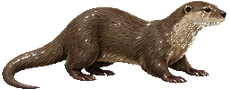
Yellowstone River Otter
River otters are Yellowstone's playful water weasel — sliding on snow banks, wrestling on the ice, and hunting fish in the rivers that stay open through winter.
Overview
North American river otters (Lontra canadensis) are aquatic mustelids that live along Yellowstone's rivers and lakes. They're social and playful — groups slide, chase, and wrestle, and their droppings (scat) and slide marks on snow banks betray their presence.
Look where rivers stay ice-free in winter — open leads of water along the Yellowstone, Lamar, and Madison rivers.
Where to find them
- Yellowstone River (Hayden): Open leads in winter.
- Lamar River: Year-round otter habitat.
- Madison River: Reliable in winter.
When to look
Year-round, daytime. Winter can be excellent where water stays open.
⚠️Stay at least 25 yd away
Frequently asked questions
Where can I see river otters in Yellowstone?+
Along rivers and lakes that stay open in winter — the Yellowstone (Hayden Valley), Lamar, and Madison rivers. Look for slide marks on snow banks and groups of animals surfacing in open water.
Are river otters the same as sea otters?+
No — river otters are smaller, freshwater, and much more agile on land (sea otters barely come ashore). River otters are the ones in Yellowstone.
Data & field guide
78 aggregate reports. Peak: Nov. Sighting frequency, not population abundance.
11 timed records. Broad dayparts avoid false precision.
Field identification: tracks & sign
Lontra canadensis · Mustelidae
Tracks
- Front foot
- 55–75mm × 50–70mm
- Hind foot
- 65–90mm × 50–70mm
- Track width
- 5–7cm
- Toes
- 5
- Stride
- 40–60 (lope), slides 2–5mcm
Small claws visible on all toes.
Scat & other sign
Often called 'spraint.' Deposited at prominent locations near water (rocks, logs, banks). Contains fish scales, bones, and crayfish parts. Strong, fishy odor.
Diameter: 10–18mm
Key identification features
- 5-toed tracks with possible webbing
- Slide marks on snow/mud
- Fishy-smelling spraint at latrines
- Habitat: streams, rivers, lakes, ponds
- Bound/slide gait pattern
ℹ️In the field
Sources & data notes
- Seasonal and hourly patterns: aggregated from NPS and observer trip reports in the project dataset (1995–2026). Only monthly counts are published; no per-sighting location or observer data.
- Report signals: official NPS/USGS aggregate or narrative report facts only. Exact dens, raw sightings, and bear-jam points are not published.
- Track & sign field guide: compiled from NPS species references and field-identification literature.
Sources & data notes
- River Otter data is drawn from official NPS, USGS, and NOAA sources catalogued in our source registry. Observer-submitted sightings are not published on this public guide.
- River Otter is documented via NPS reference pages; no dedicated population time-series is in the public dataset.
- NPS Yellowstone mammals overview — National Park Service (Official mammal checklist/context page with current park-level population notes; not point data.)
- NPS Yellowstone wildlife overview — National Park Service (Official wildlife viewing and habitat context; not observation records.)
Spotted something off, or want a deeper dive? Every claim above links to its original source — look for the ↗ markers and the Sources section.