Yellowstone Wildlife by Month
Plan your trip by what’s actually happening each month — average weather, daylight hours, and the seasonal wildlife events that define Yellowstone’s calendar.
ℹ️How to read this page
Weather, daylight, and species peaks
Use the conditions chart for trip planning, then read the species matrix by row: darker cells show each animal’s strongest months relative to its own aggregate monthly pattern.
Species peaks are commercial-safe aggregate month counts only. They are not sighting maps, hotspot recommendations, or per-record observation data.
Month-by-month overview
| Month | Avg temp | Snow | Daylight | What’s happening |
|---|---|---|---|---|
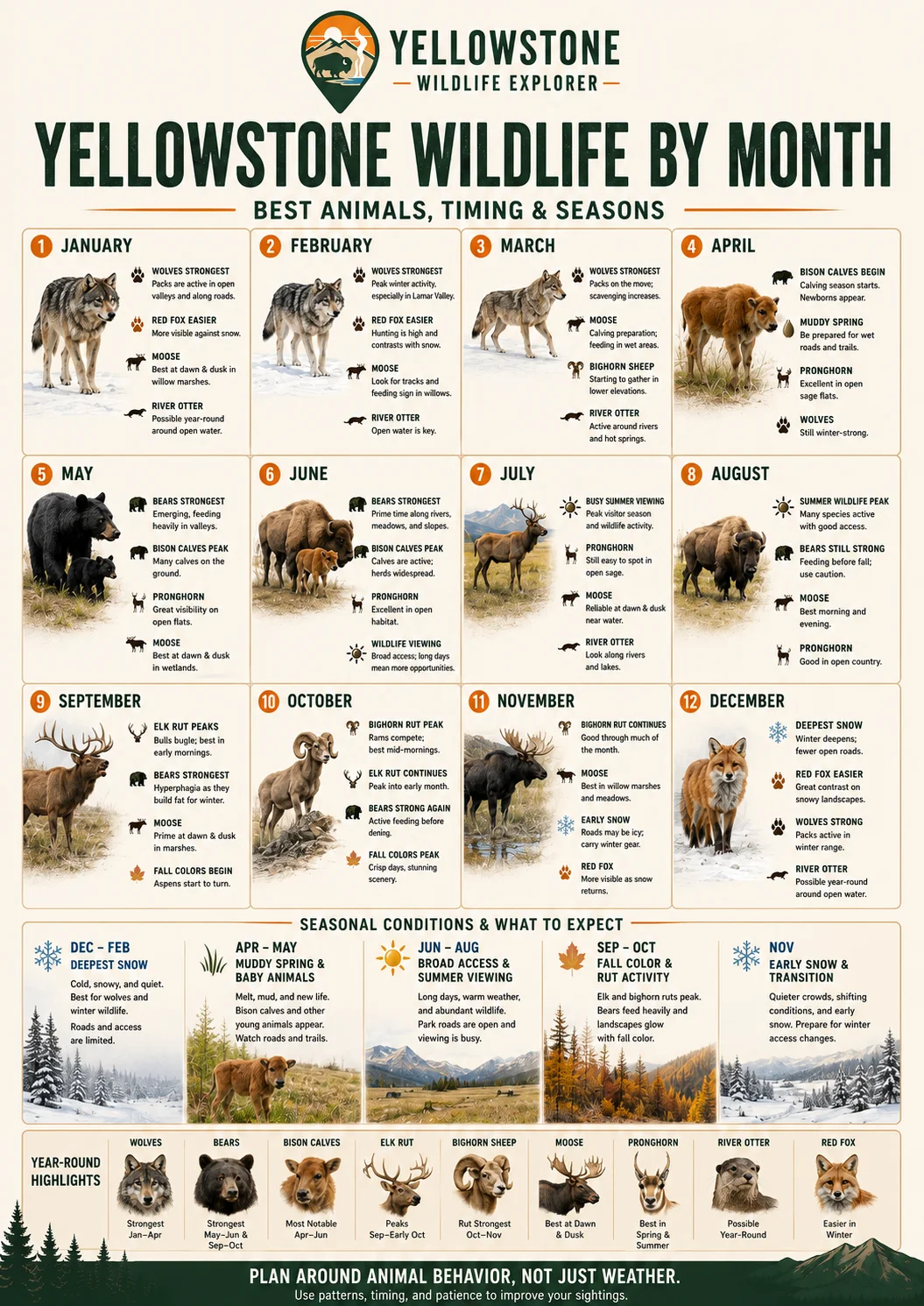
| January | ~22°F | 11″ | 9.2h | Peak wolf-watching. Bison crowd the thermal valleys. Coyotes mate. Most animals concentrated and visible against snow. |
| February | ~21°F | 13″ | 10.4h | Wolves still excellent; mating season for wolves and coyotes. Bison struggle in deep snow — visible in low valleys. |
| March | ~31°F | 10″ | 11.9h | First grizzly bears emerge from dens (NPS 2018: first sighting March 10). Bears head to winter-killed animals. Wolf activity high. |
| April | ~38°F | 7″ | 13.4h | Bear emergence accelerates; black bears appear. Wolf pups born. Bison begin calving late. Elk moving to summer range. |
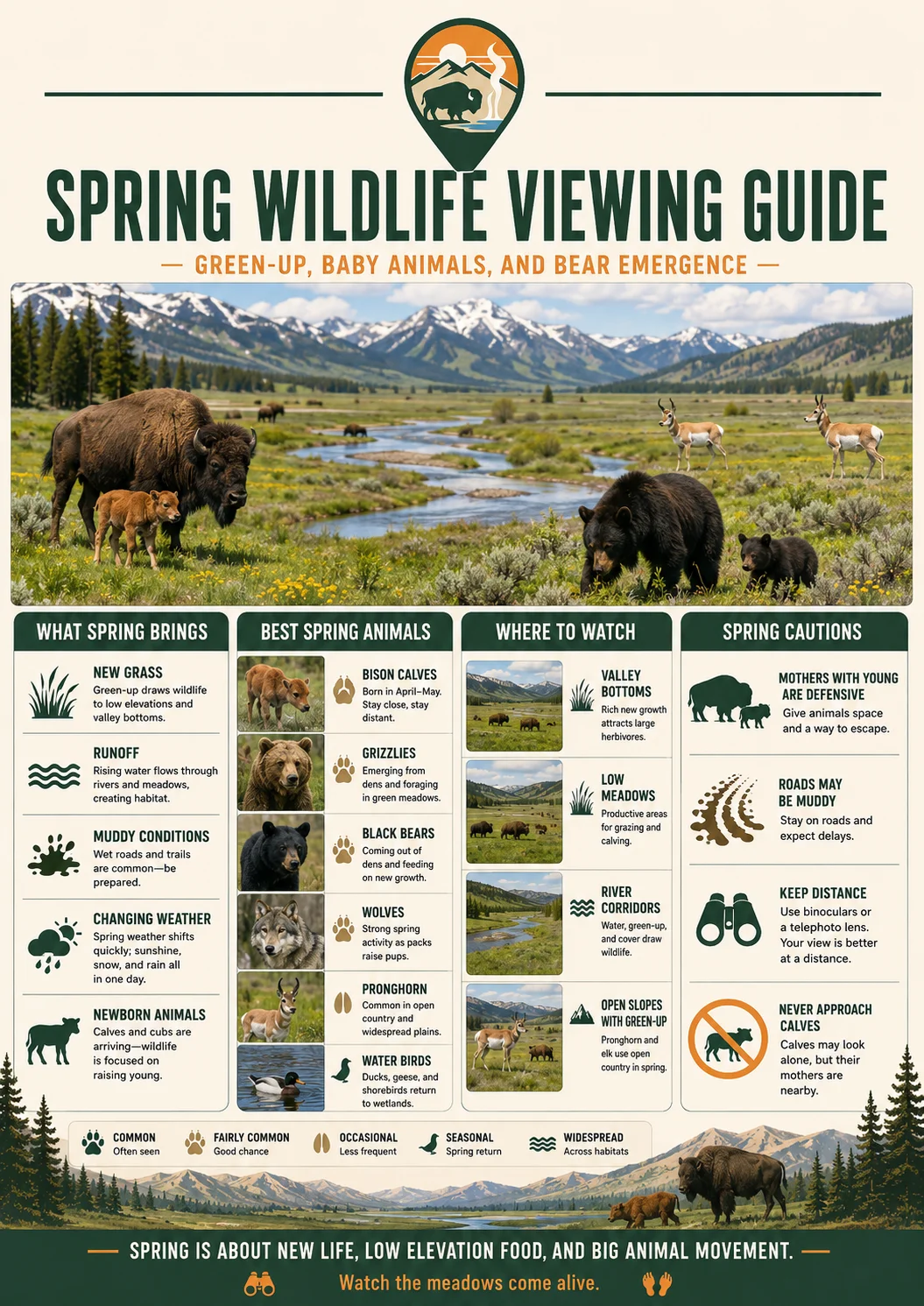
| May | ~47°F | 2″ | 14.8h | Bison calves (red dogs) dot the valleys. Bears forage openly. Pronghorn fawns. Most roads open. |
| June | ~57°F | 0″ | 15.5h | Bison calves active. Wolf pups emerge near dens. Bear viewing strong in valleys. Birds nesting. |
| July | ~66°F | 0″ | 15.2h | Bison rut begins to build. Bears move higher into cover. Elk calves visible. Long days; dawn viewing still best. |
| August | ~64°F | 0″ | 14h | Bison rut in full swing (jams common). Bears forage berries at higher elevations. Hot; midday animals in shade. |
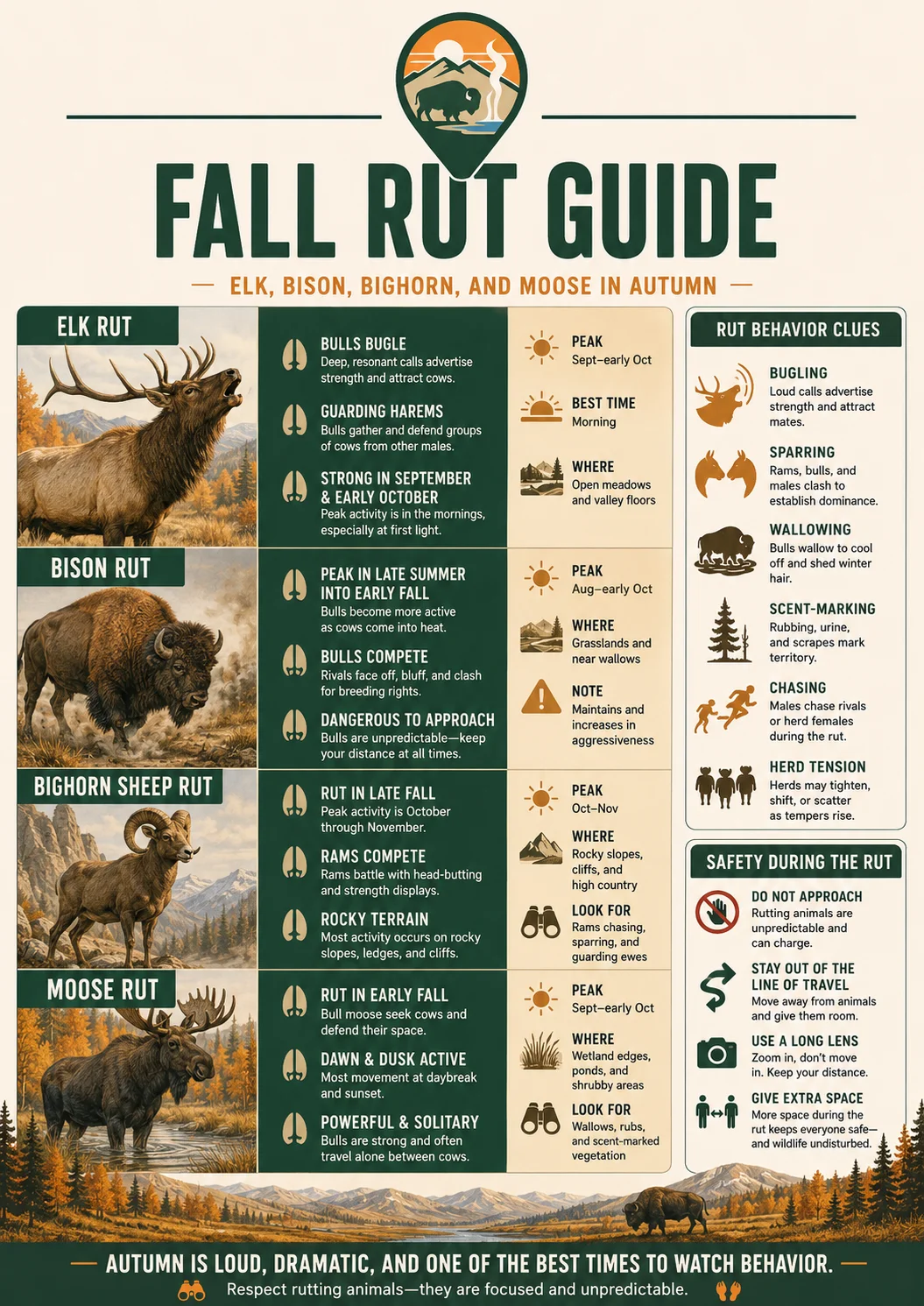
| September | ~55°F | 1″ | 12.5h | Elk rut begins — bugling bulls across the northern range. Bears enter hyperphagia. Crowds ease. |
| October | ~40°F | 5″ | 11h | Elk rut peaks early. Bears hyperphagic and very active. Bighorn sheep rut. Fall colors. |
| November | ~29°F | 12″ | 9.7h | Bears den up. Elk move to winter range. Fewer animals visible; winter birds arrive. |
| December | ~22°F | 12″ | 8.8h | Winter mode: wolves visible on snow, bison in valleys, swans on rivers. Last bear sightings typically early month (NPS 2018: last grizzly Dec 18). |
Pick your priority
🐺 For wolves
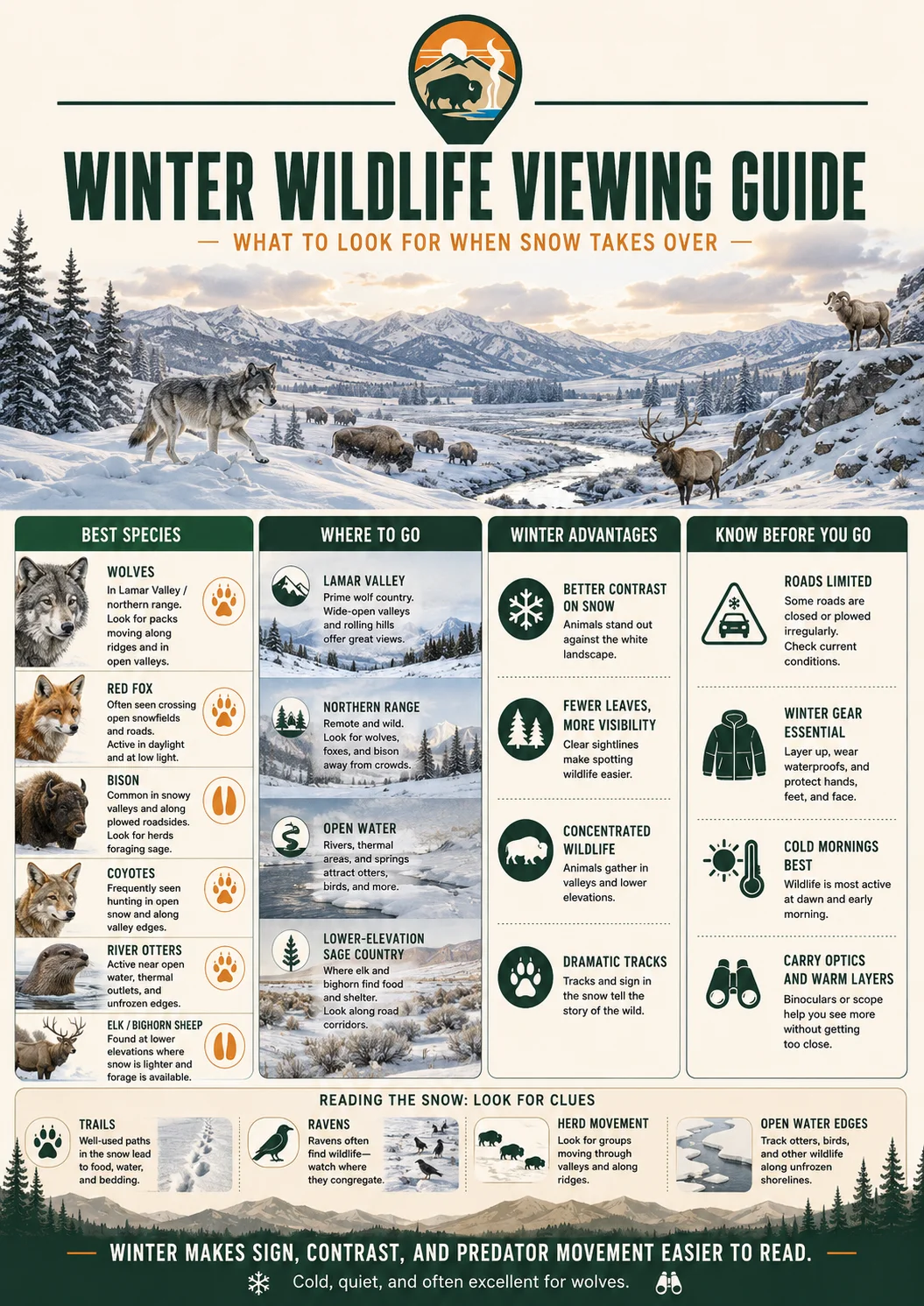
Jan–Apr. Snow makes wolves visible; dawn on the Lamar Valley corridor. See best time for wolves.
🐻 For bears
May–Jun & Sep–Oct. Spring emergence and fall hyperphagia. See best time for bears.
🐂 For bison & babies
May–Jun. Red-dog bison calves, pronghorn fawns. Bison rut ramps up Aug.
🦌 For the elk rut
Sep–early Oct. Bugling bulls, sparring, harems across the northern range.
Frequently asked questions
What is the best month to see wildlife in Yellowstone?+
It depends on your target. January–March are best for wolves (snow contrast, concentrated prey). May–June are best for baby animals (bison calves, pronghorn fawns, wolf pups). September–October are best for the elk rut and hyperphagic bears. July–August have the most animals but also the most people and heat.
When is the worst time for wildlife in Yellowstone?+
There's no bad month, but November is the quietest and hardest: bears are denning, many roads close, and animals disperse to winter range. Mid-winter (Dec–Feb) has incredible wolf viewing but harsh conditions and limited road access.
Is Yellowstone good for wildlife in winter?+
Outstanding for wolves and bison, if you can handle the cold. Dark wolves on snow are easy to spot, prey concentrates in the valleys, and crowds vanish. Only the northern range road stays open to cars; the rest is ski or snowcoach.
When are bison calves born?+
April and May. The orange-red calves ('red dogs') appear in late April and are a highlight of spring. By June they're up and running with the herd.
When is the elk rut?+
September into early October. Bull elk bugle, gather harems, and spar in the northern range meadows — especially around Mammoth and the Lamar Valley. Dawn and dusk are peak bugling.
Sources & data notes
- Weather: NOAA NCEI GHCN-Daily, Mammoth station (averaged across years of record).
- Daylight: astronomical hours carried in the commercial-safe export.
- Bear emergence/denning dates: NPS Bear Management annual report (2018).
- Species matrix: commercial-safe aggregate month counts only; no sighting maps or per-record observations.
- NOAA GHCN-Daily Mammoth Yellowstone monthly weather aggregate — NOAA NCEI (Monthly aggregate derived from daily GHCN observations.)
- NPS Yellowstone Bear Management annual reports — National Park Service (Only a small subset of available annual bear reports is currently parsed.)