Yellowstone Predator Spotting Guide
Yellowstone predator watching rewards people who scan slowly, arrive early, and understand scale. Most sightings start as motion, a dark shape, or other watchers looking through scopes.
Start with habitat
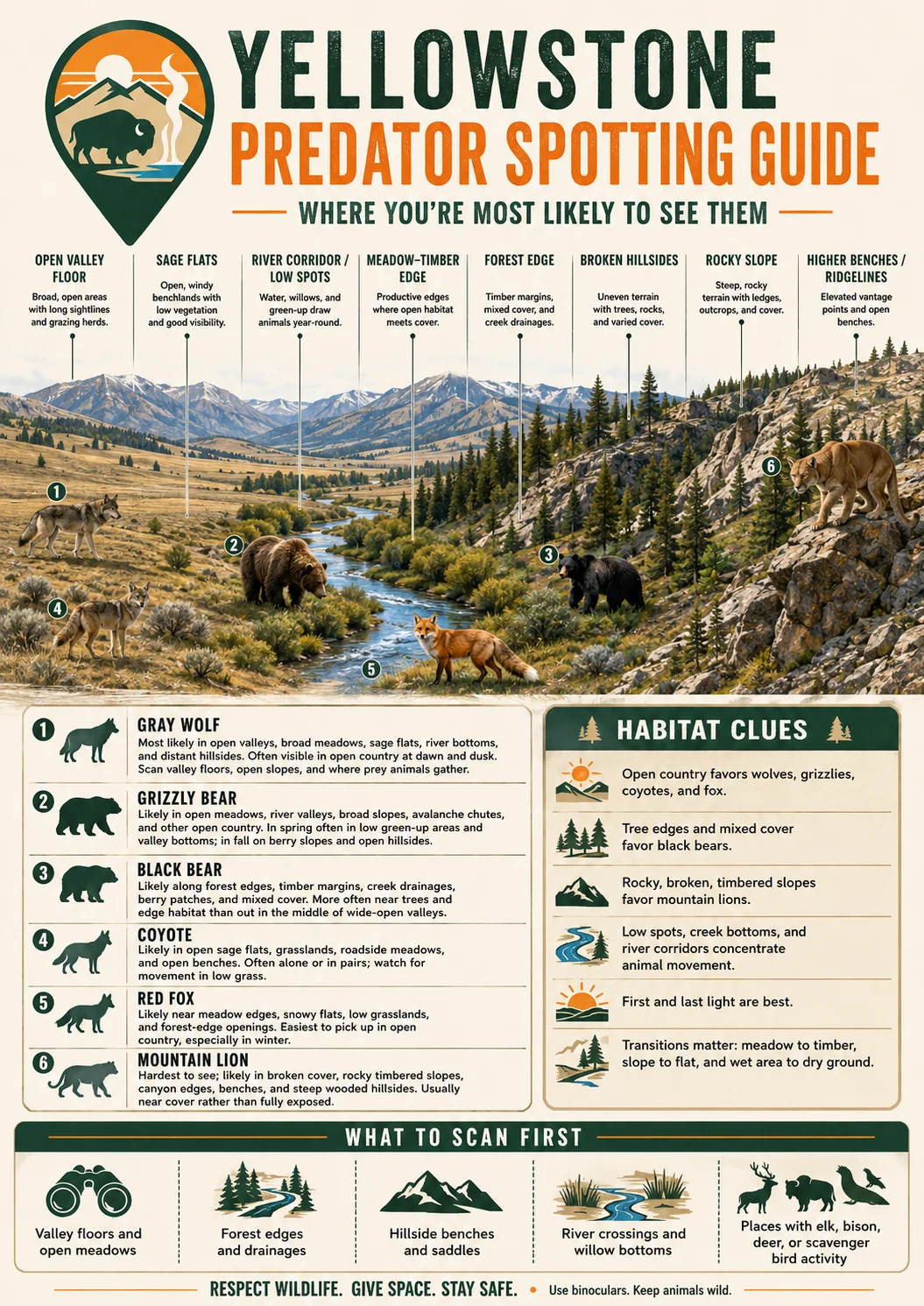
- Wolves: open northern-range valleys, slopes above elk and bison, especially Lamar.
- Grizzly bears: spring meadows, carcass areas, Hayden and Lamar, then higher summer slopes.
- Coyotes and foxes: open meadows where small mammals are active.
- Mountain lions and lynx: forested cover and rough edges; sightings are rare and usually brief.
How to glass
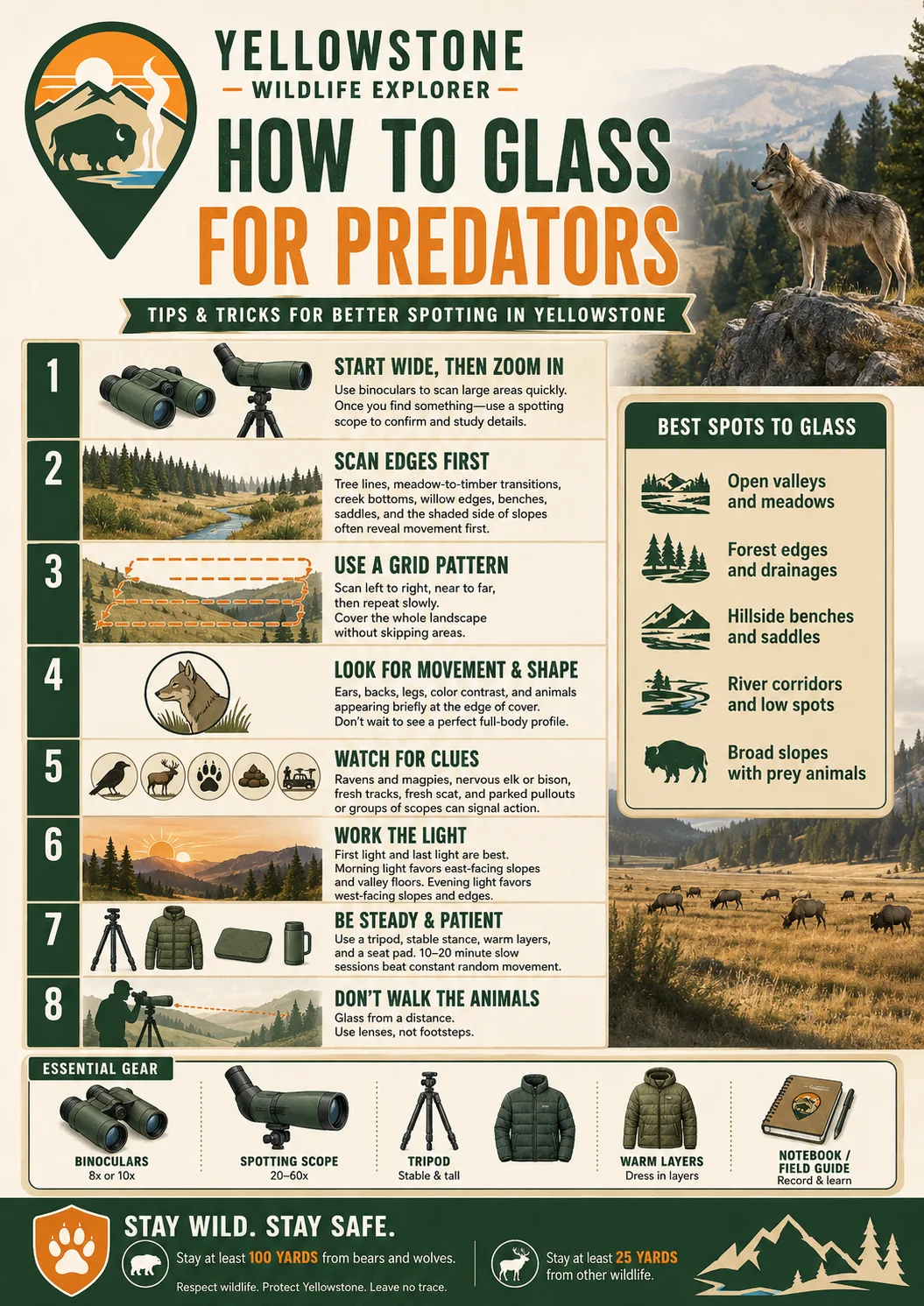
Sweep broad terrain with binoculars first, then lock a spotting scope on anything that moves or looks out of place. Scan ridgelines, creek bottoms, carcass zones, and the boundary between meadow and cover.
Use size carefully
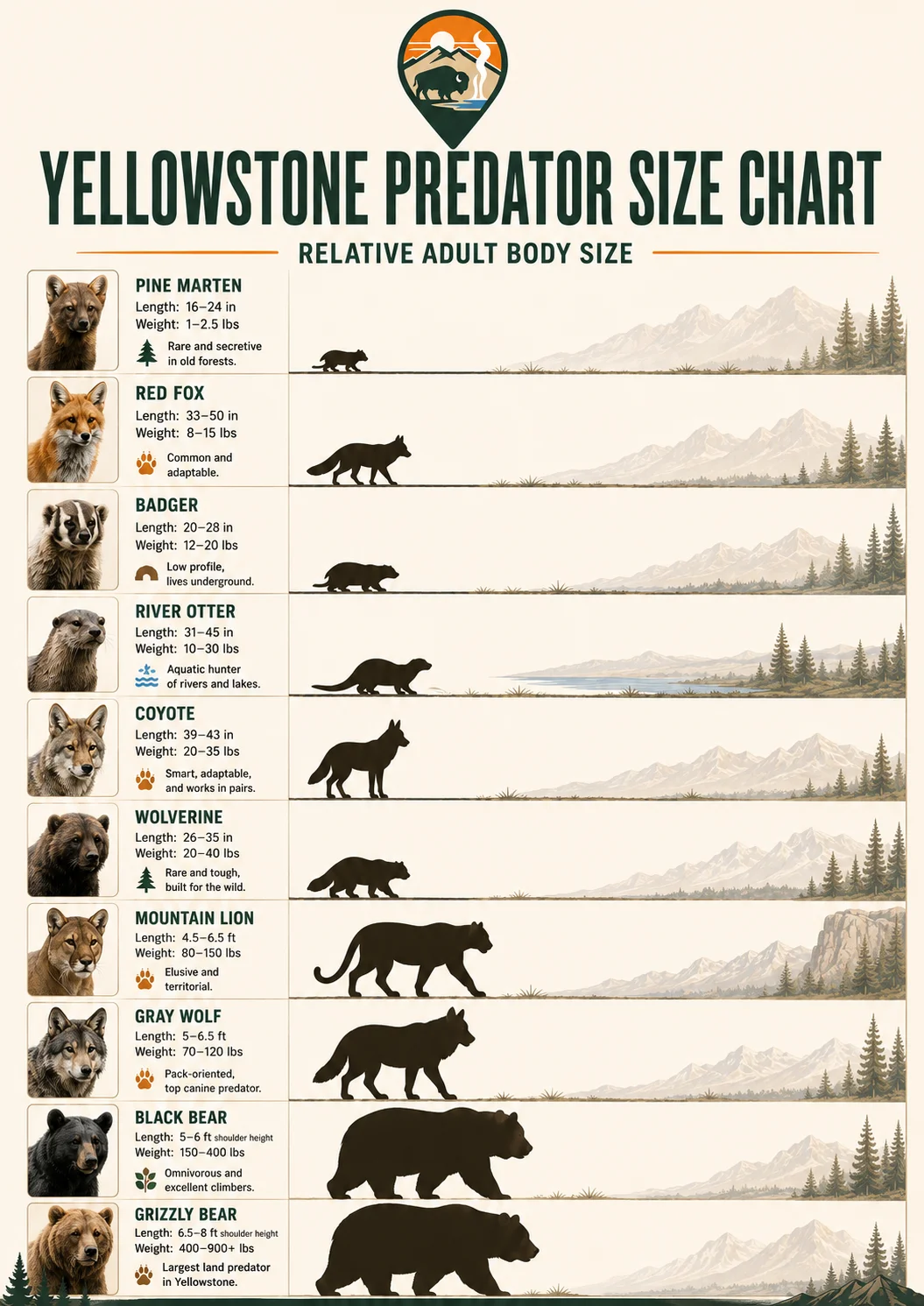
Distance makes every predator look smaller. Compare the animal against nearby bison, elk, sagebrush, snowbanks, and terrain. When in doubt, watch gait and behavior before deciding.
Time of day
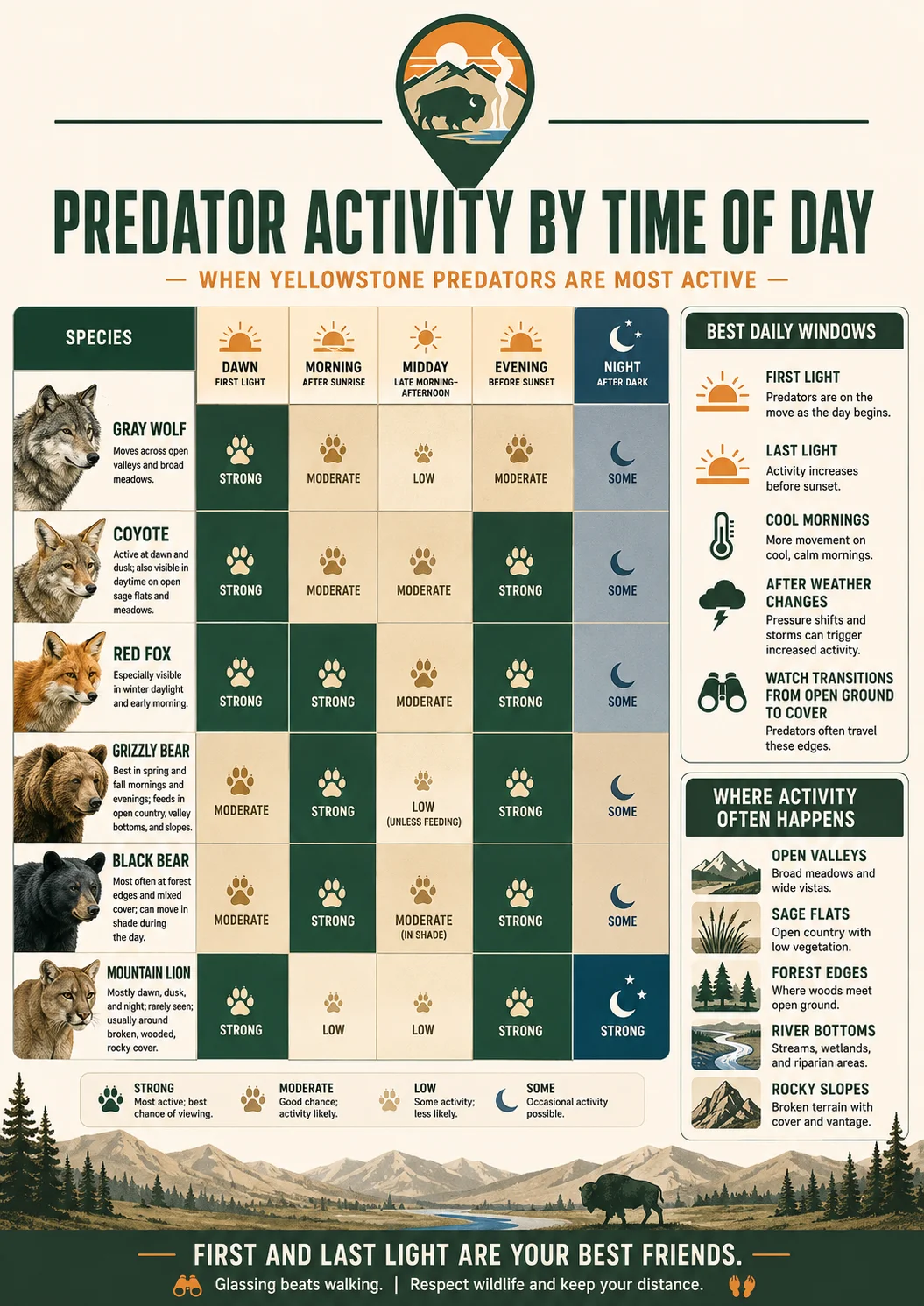
Dawn is the best window because predators are still moving, light is low, and traffic is lighter. Dusk can be strong too, but you have less time to identify what you are watching before dark.
Predator activity by time of day
⚠️Predator viewing is distance viewing
For location-specific scanning, see the Lamar Valley guide and Hayden Valley guide.
Frequently asked questions
Where is the best place to spot predators in Yellowstone?+
Lamar Valley is the best all-around predator-watching corridor, especially for wolves and coyotes. Hayden Valley is strong for grizzlies in spring and fall. Forest edges, carcass areas, and open slopes are worth slow glassing.
What time of day is best for Yellowstone predators?+
Dawn is the best single window, followed by dusk. Wolves, coyotes, foxes, and bears are more active in low light, while midday heat and traffic usually reduce visible movement.
Do I need a spotting scope?+
For wolves and distant bears, yes. Binoculars help you find movement; a spotting scope lets you confirm species and watch behavior from a legal distance.