Yellowstone Wildlife Safety
Safe wildlife watching is mostly distance, patience, and road etiquette. Yellowstone animals are wild, fast, and often stressed by crowds. Give them room and use optics to bring the view closer.
The distance rules
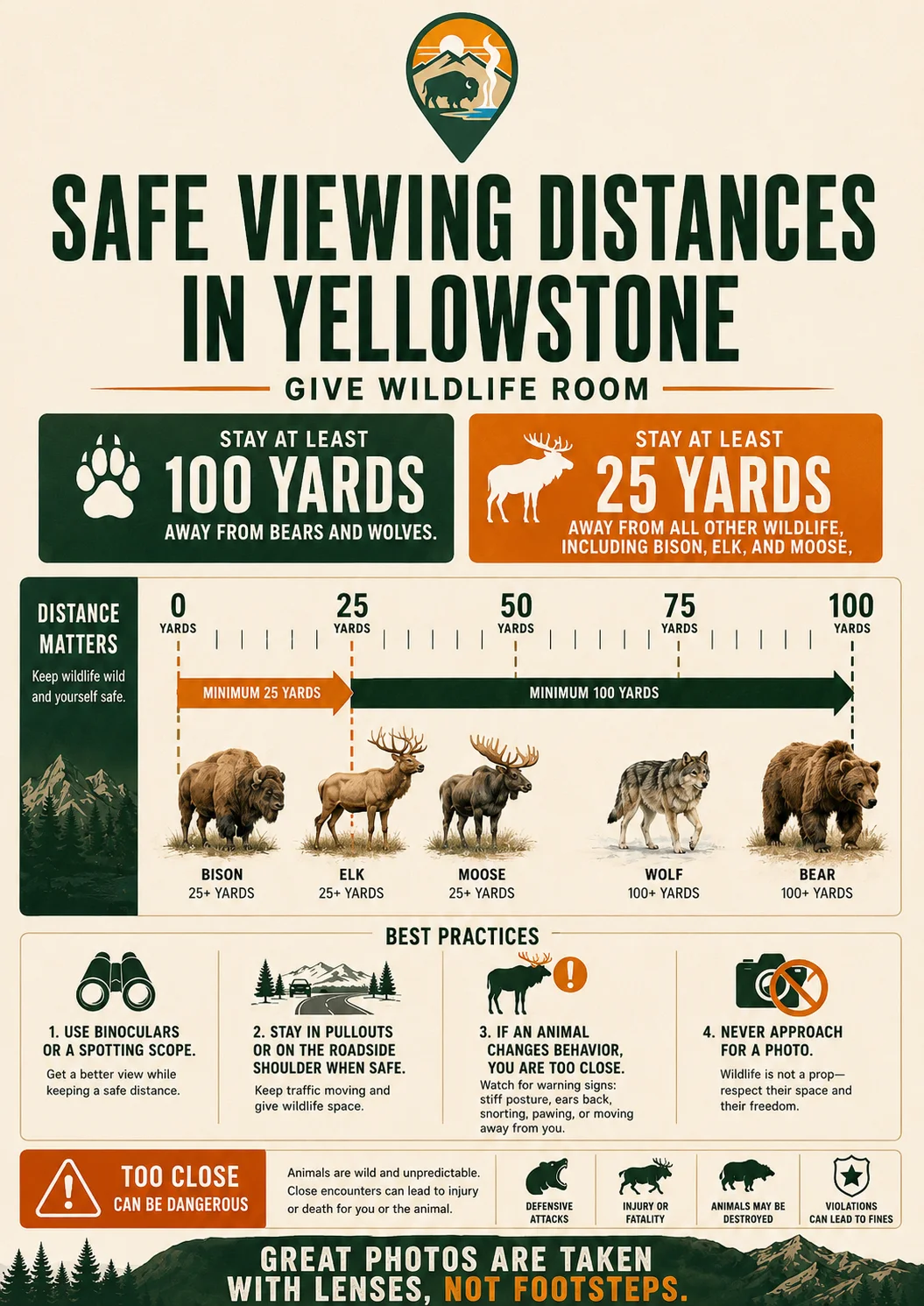
- 100 yards: bears and wolves.
- 25 yards: bison, elk, moose, deer, coyotes, birds, and all other wildlife.
- More distance: any animal with young, any animal feeding, and any animal that changes behavior because of you.
⚠️If the animal reacts, you are too close
Bison safety
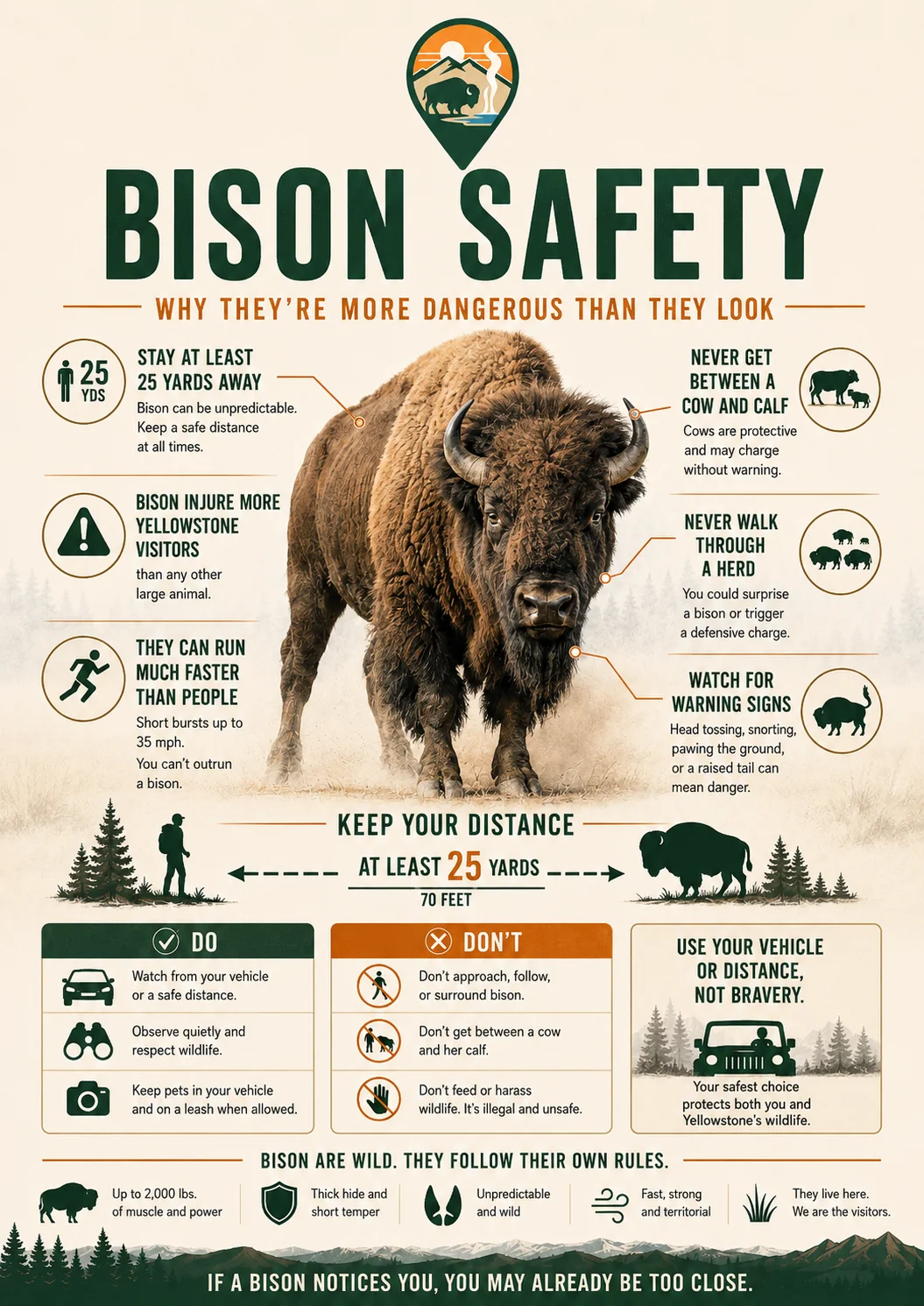
Bison are the animal visitors most often misjudge. They can look still and tolerant until they are not. Keep the 25-yard minimum, never walk through a herd, and give extra space during the summer rut.
Body language to watch
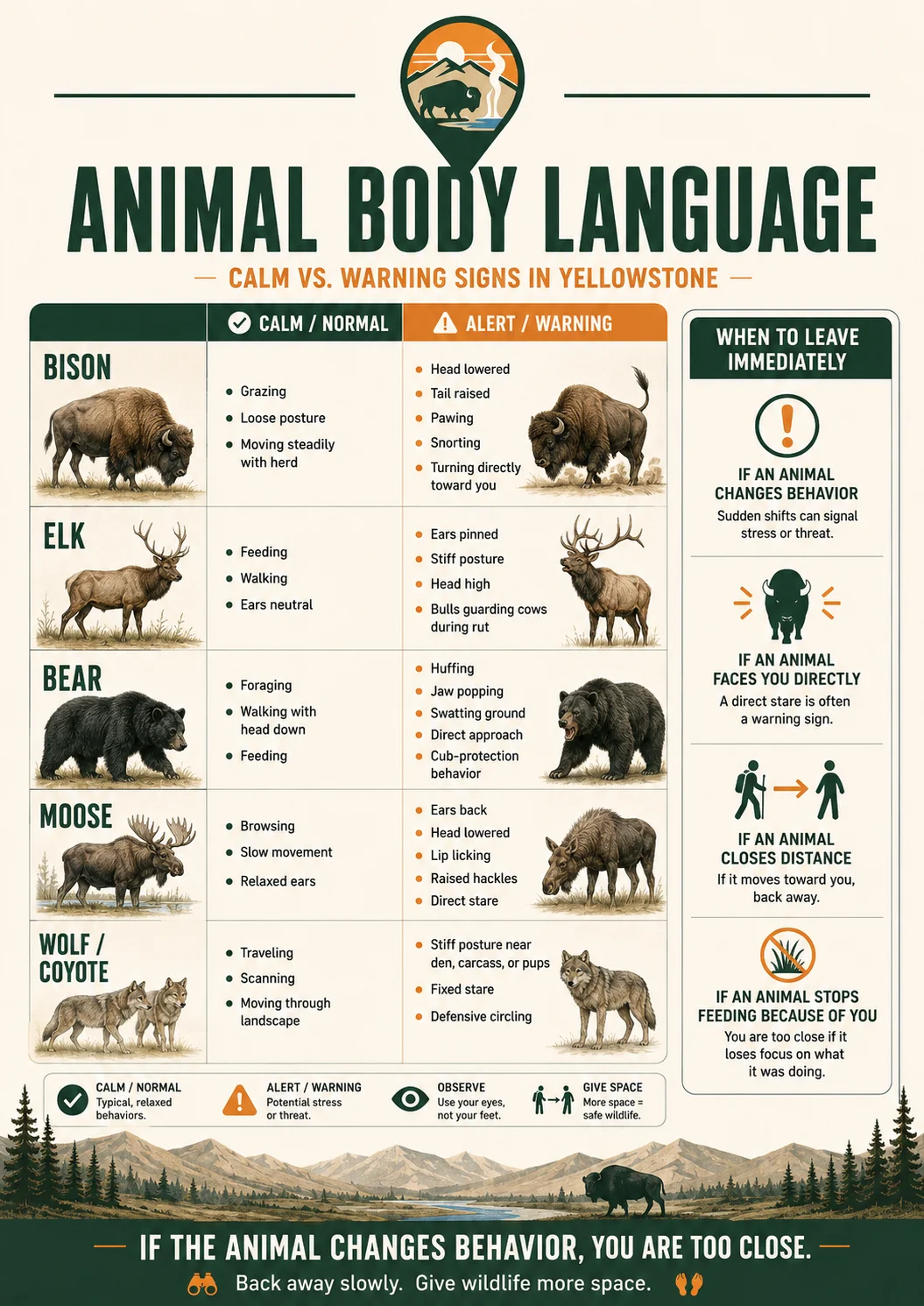
Animals usually warn before they charge. The problem is that the warning may be brief, subtle, or blocked by a crowd. Watch the whole animal, not only its head, and leave before the warning escalates.
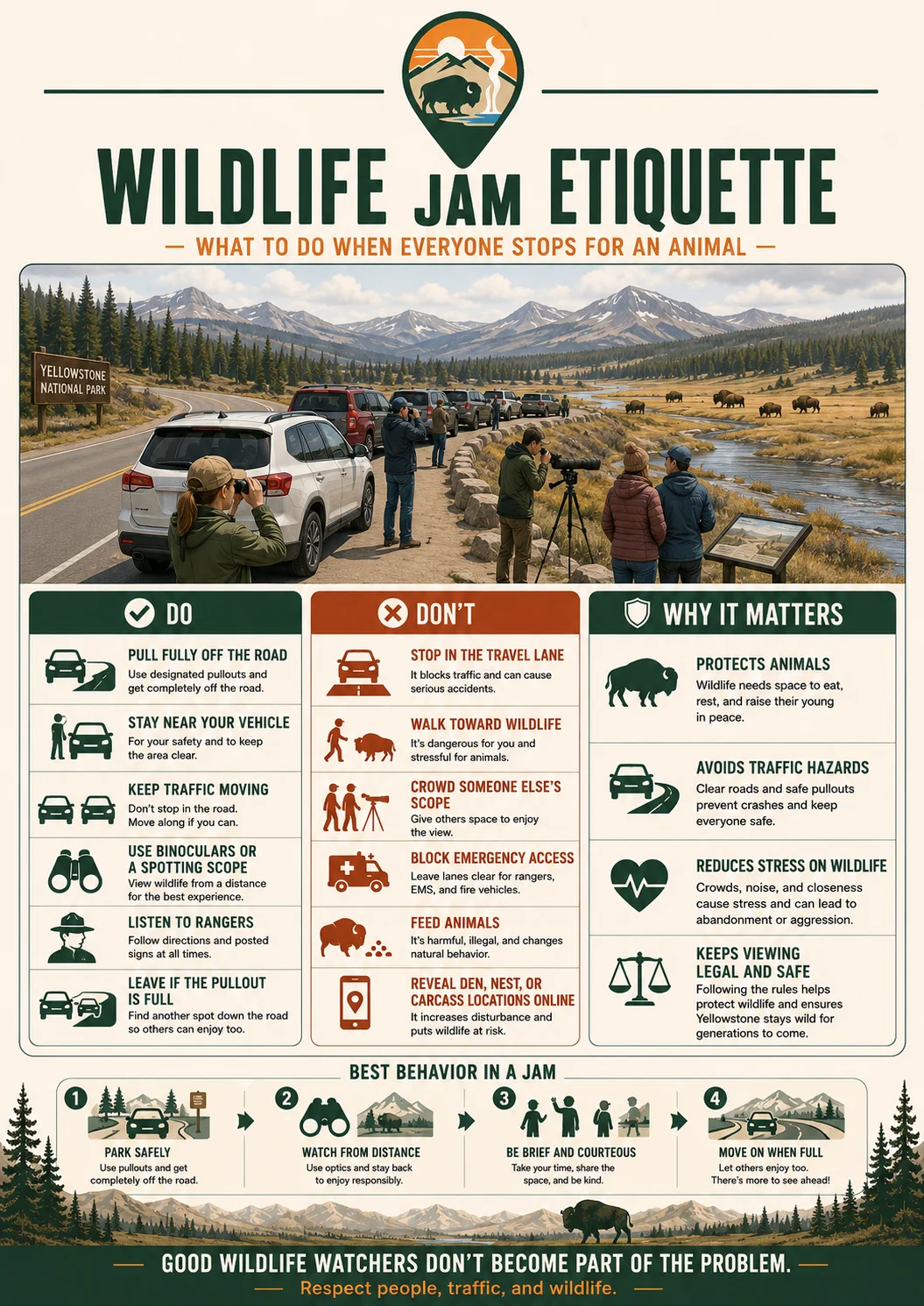
Wildlife jam etiquette
A good sighting can turn into a traffic hazard quickly. Use signed pullouts, keep the road clear, and avoid pressuring an animal with a line of people or vehicles. The best photo is not worth blocking an emergency vehicle or pushing wildlife toward the road.
Bear spray belongs on your body
Carry bear spray whenever you leave the vehicle in bear country, and put it where your hand naturally reaches. It does not help in a backpack. See the full bear spray guide for choosing, carrying, and practicing with a can.
Frequently asked questions
How far away should I stay from Yellowstone wildlife?+
Stay at least 100 yards from bears and wolves, and at least 25 yards from bison, elk, moose, deer, and all other wildlife. Use pullouts, binoculars, and spotting scopes instead of approaching.
What animal injures the most people in Yellowstone?+
Bison injure more Yellowstone visitors than any other animal. They look calm while grazing, but they can run about 35 mph and may charge if crowded, surprised, or blocked from their herd.
What should I do in a wildlife jam?+
Use a pullout, keep your wheels off the traffic lane, stay near your vehicle unless it is safe and legal to step out, and never walk toward the animal. If there is no legal place to stop, keep moving.