Yellowstone Wildlife Identification Guide
Yellowstone ID mistakes usually come from distance, excitement, and unreliable color cues. Use structure, movement, habitat, and behavior before naming the animal.
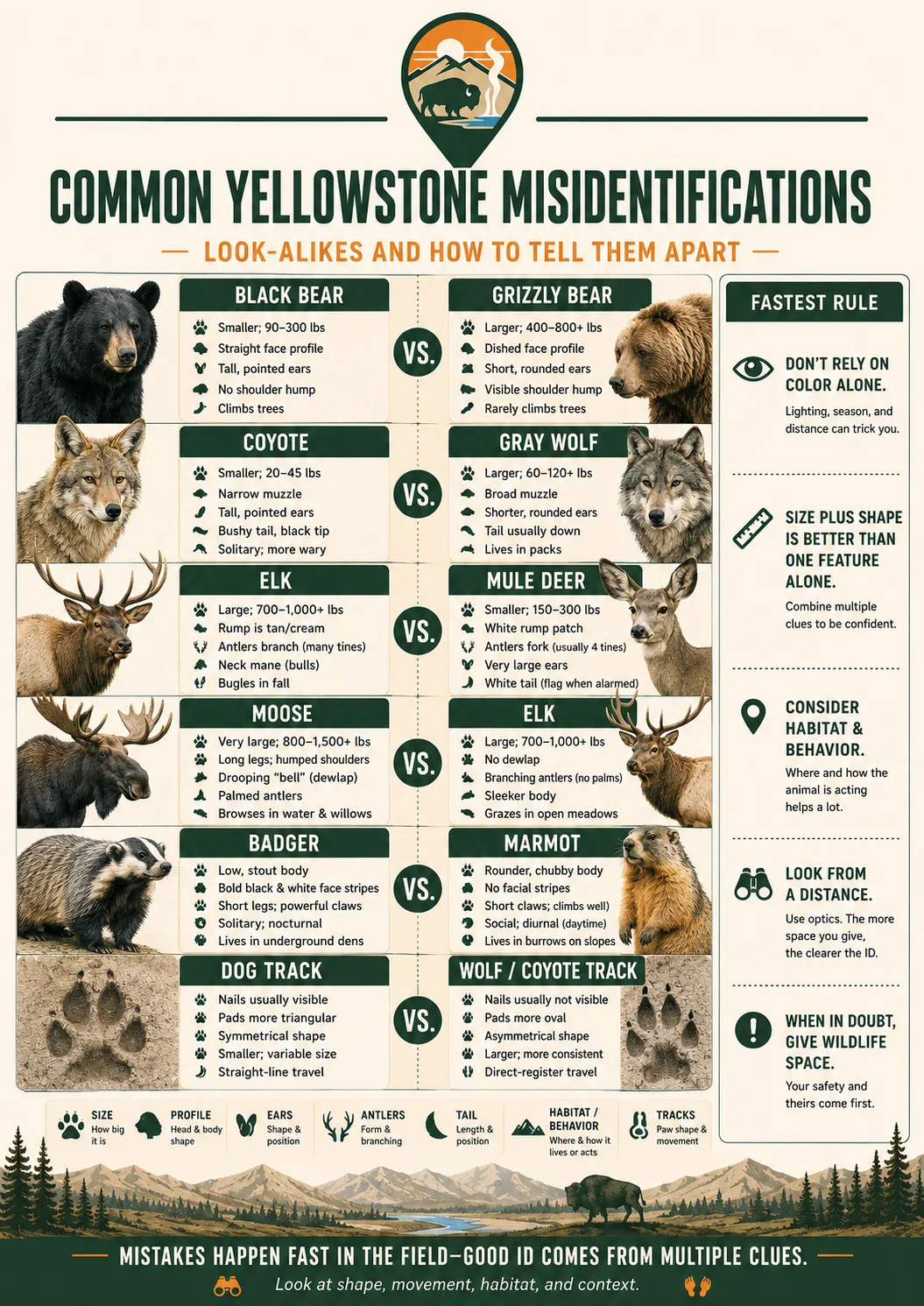
Wolf vs coyote
Wolves are much larger, blockier, and more powerful, with broad heads and longer legs. Coyotes look lighter, narrower, and more delicate. At distance, compare movement and body proportions before size alone.
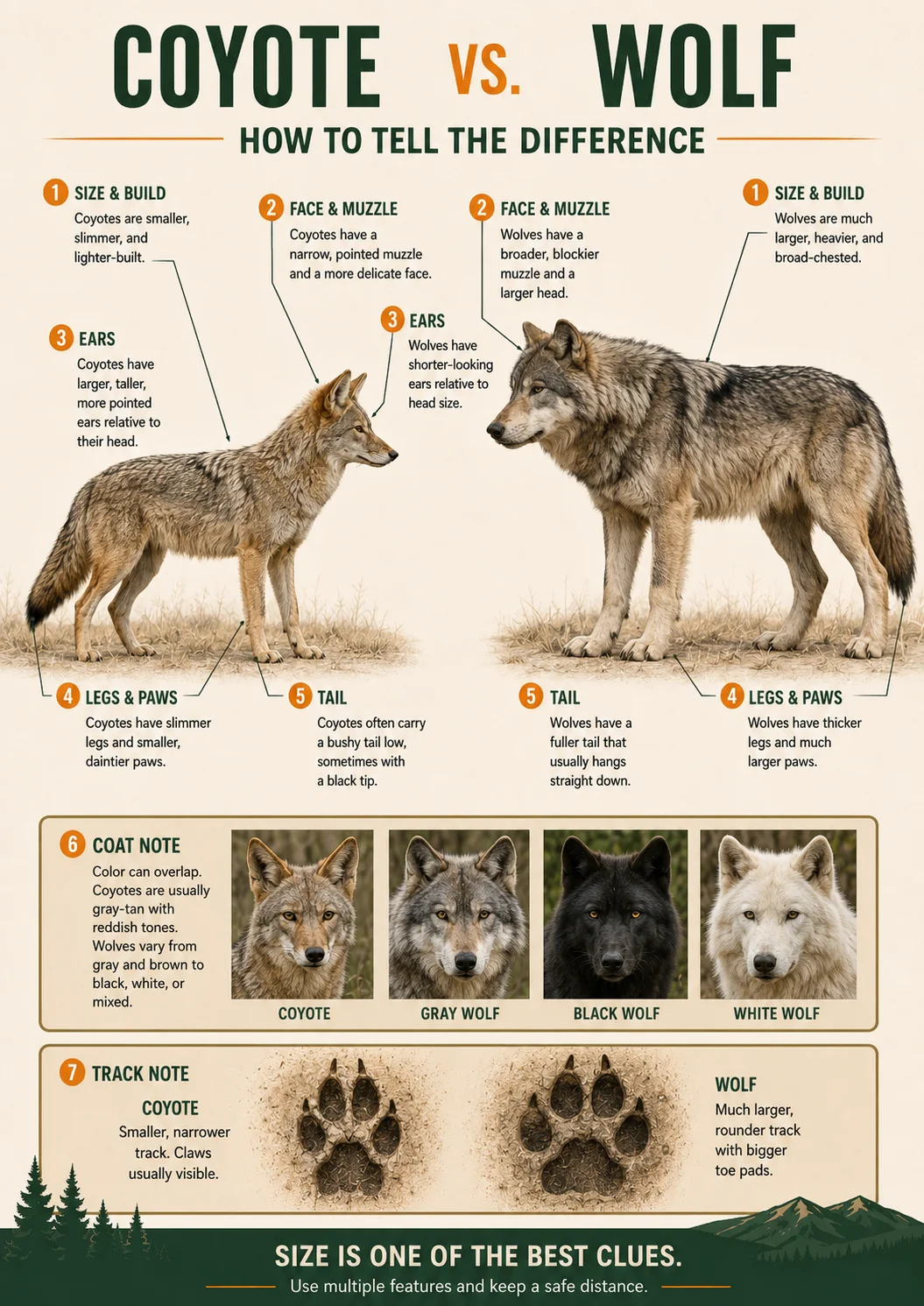
Grizzly vs black bear
Grizzlies have a shoulder hump, rounder ears, a dished face, and long digging claws. Black bears lack the hump, have taller ears, and often show a straighter face profile. Coat color is not reliable.
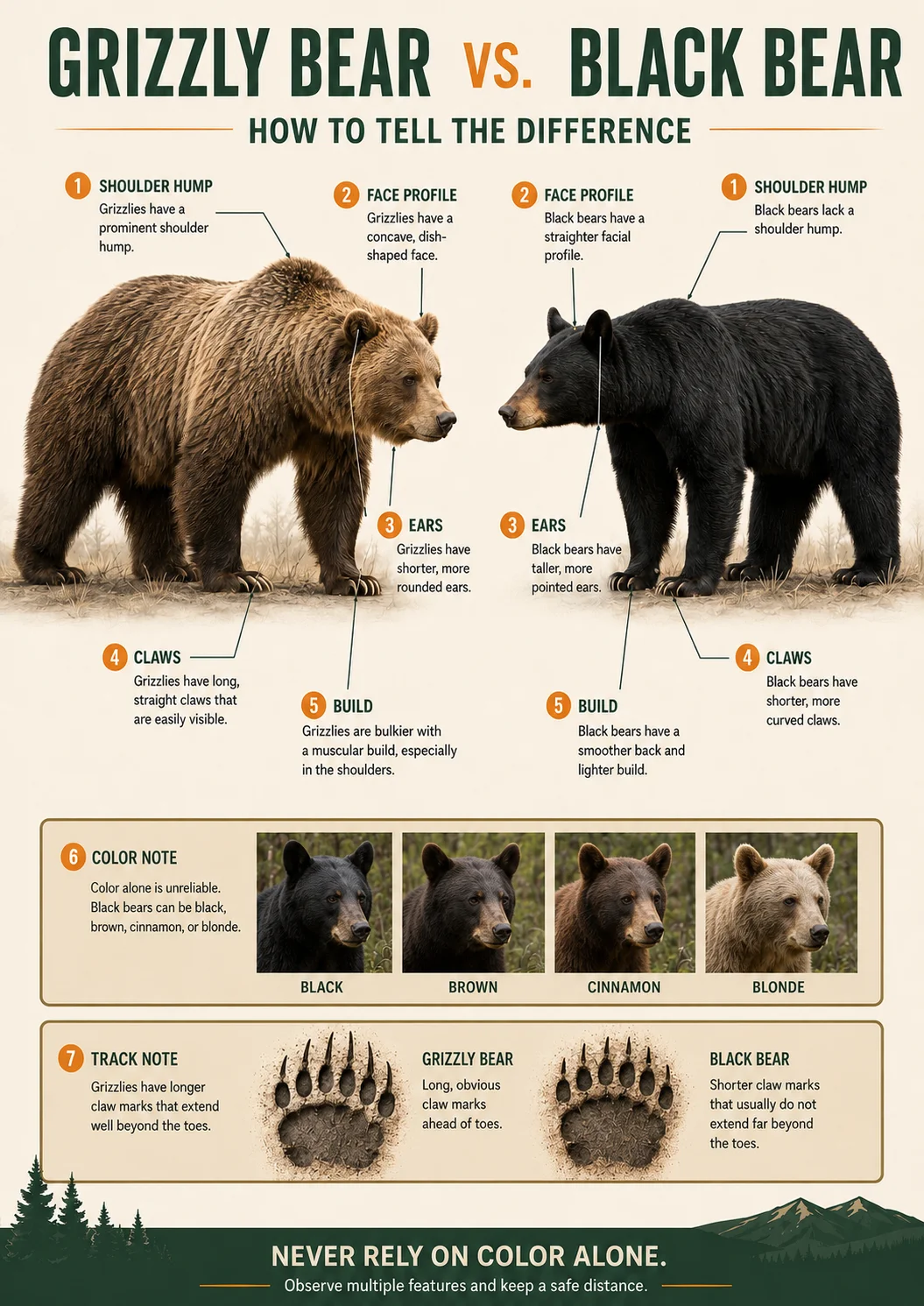
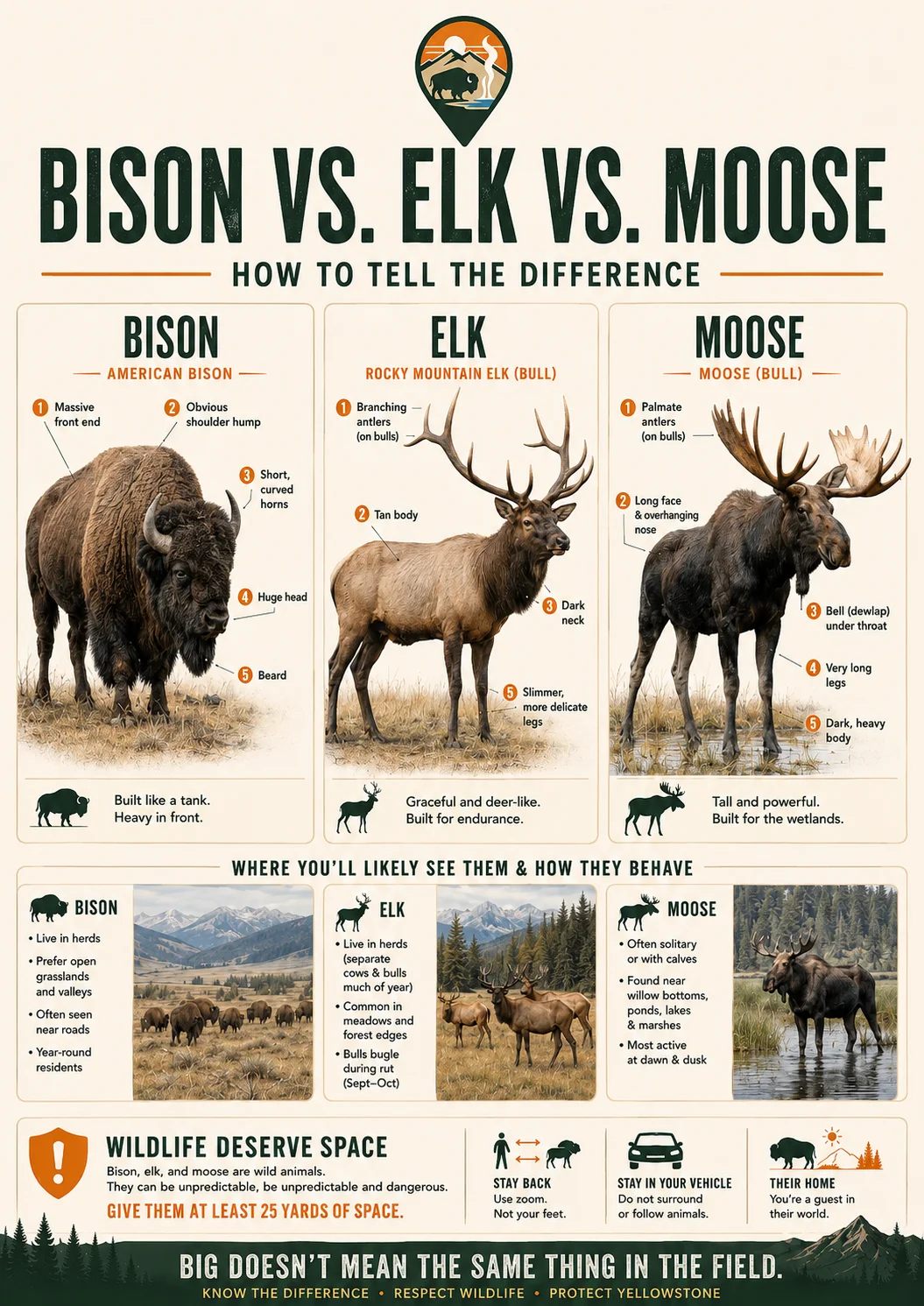
Bison vs elk vs moose
These are all large mammals, but they do not share the same shape. Bison are front-heavy grazers, elk are deer-like herd animals, and moose are tall, long-legged browsers often found near willows and water.
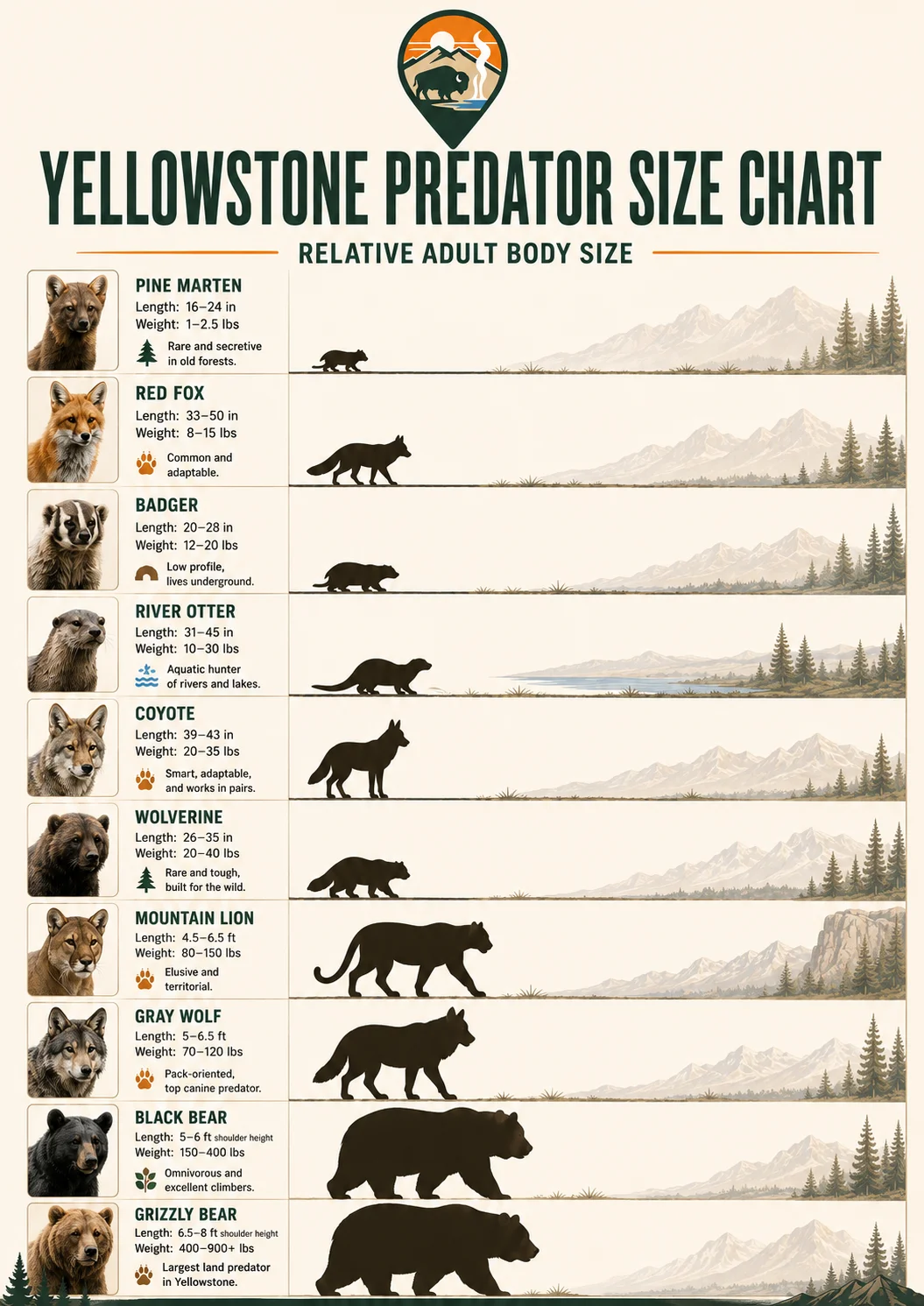
Predator scale
Small predators can look large when they are the only moving object in a big valley. Compare against known-size animals and terrain, then confirm with a scope.
For tracks, see the animal tracks guide.
Frequently asked questions
What is the most common Yellowstone wildlife ID mistake?+
Calling distant coyotes wolves is one of the most common mistakes. Scale is hard across open valleys, so compare body build, head shape, gait, and behavior before deciding.
Can I identify a grizzly by color?+
No. Black bears can be brown, cinnamon, or blonde. Use the shoulder hump, face profile, ear shape, and claw/track clues instead of coat color.
How do I tell bison, elk, and moose apart quickly?+
Bison are massive, dark, and hump-backed. Elk are deer-like herd animals with lighter bodies and, on bulls, branching antlers. Moose are taller, darker, long-legged, and usually solitary in wet willow habitat.